The whole experiment is broken down to two.
1- Manual interference
2- Digital interference
To cover the first one I needed to go "back to basics" and look how the letters are formed: writing tools. While the tools people used to write the letters of the Latin alphabet after first century CE is the direct affect of shaping the letterforms, some other factors played their parts altering the armature of the letters completely.
This document stands as a draft for introduction and background of the paper. The background section looks at the evolution of letterforms in the Latin alphabet from the Trajan's Column from the Roman Empire, until the invention of printing press. While going through that, I tried to break the evolution down to two that affected the letterform evolving process: The writing tools and economical and social situations. These two alone shaped the armature and style of the letterforms.
Historical definitions, dates, names etc. are all cumulative knowledge of the past years of my education but as a reminder I consulted to Robin Dodd's From Guthenberg' To Opentype (2006), Ilex Press Ltd.
https://www.dropbox.com/s/7w75s353wg1xzwi/meddler_intro%2Bbackground.docx
Wednesday, November 28, 2012

Thursday, November 22, 2012
the notion of artifact. During the experiment a digital printer's process is interupted by hardware modifications and design choices. The experiment I am going to be conducting is mostly inspired by this experiment however it is moved to type design area.
Baseline Magazine Issues 57-58.
https://www.dropbox.com/s/gn7akb2iugzarga/CONTROL_PRINT.pdf
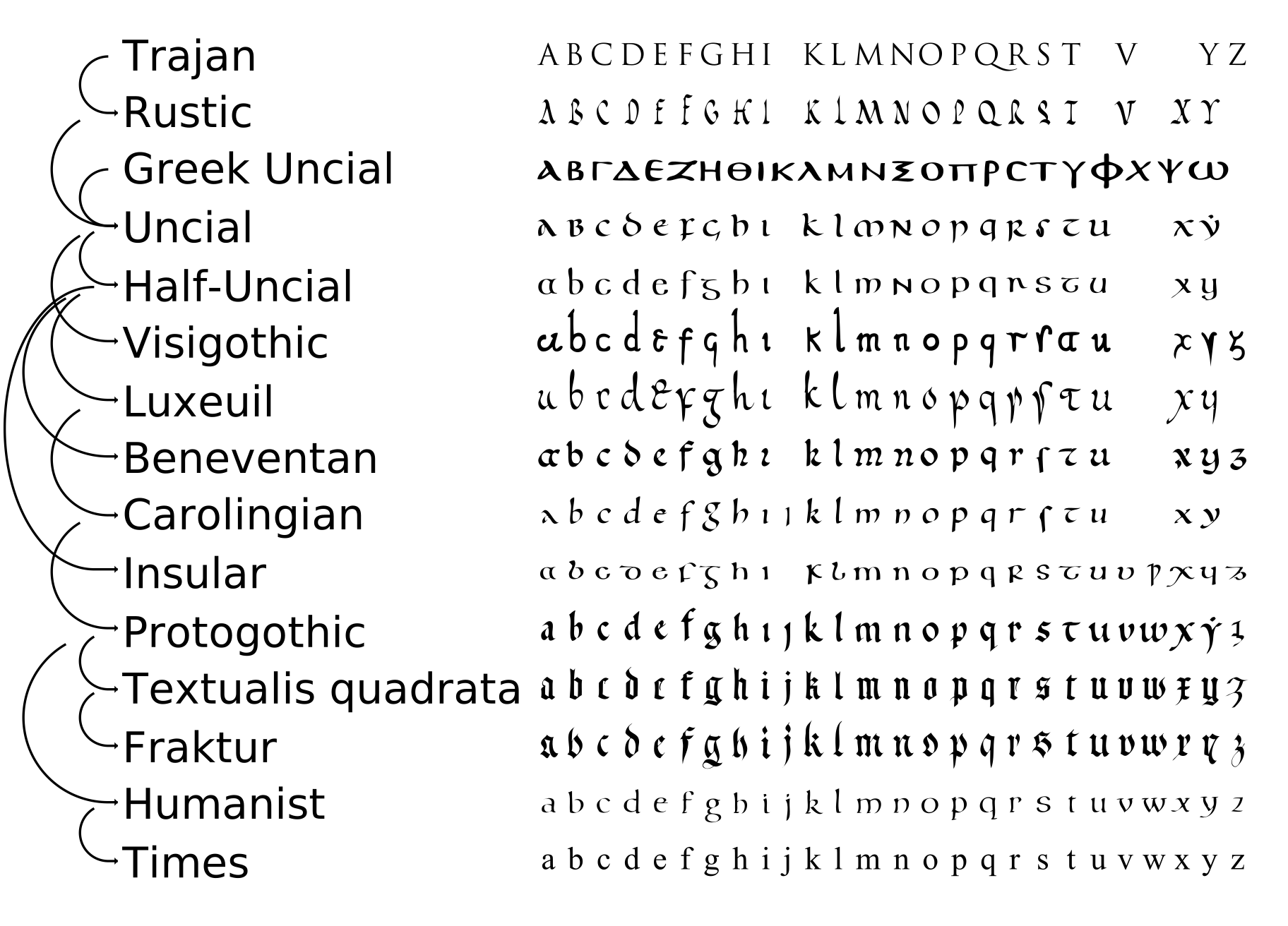
This diagram is a reminder to myself that how a manual interference can be done and affects what . It breaks up in to 2 (before Guthenberg).
First one is thin - thick relationships which is changing according to the tools used to write.
Second one is the monolinear structure - the structure of typefaces when their vertical and horizontal stroke weights considered visually equal. This point us to the script family the typeface belongs to.
The diagram will expand as more is done.

First one is thin - thick relationships which is changing according to the tools used to write.
Second one is the monolinear structure - the structure of typefaces when their vertical and horizontal stroke weights considered visually equal. This point us to the script family the typeface belongs to.
The diagram will expand as more is done.

Thursday, November 1, 2012

Wednesday, October 31, 2012

Thursday, October 18, 2012
Deconstruction of the Typeface Design Process
This experiment is derived from a series of printer experimentations done by myself a while ago with the notion of deconstruction. To improve upon what has been done I will be bringing the evaluation of the legibility of typefaces during the process which brings the interaction between legibility and communication. My aim is to observe the typeface design process with an experiment of controlled and uncontrolled design choices and how those choices affect the outcome of the process regarding the letter structures and the visual system of the typeface. Each typeface is unique based on specific features like x-height, stroke regulation, ascender and descender characteristics, serifs and etc. These features defines the use (text, display), form (serif, sans-serif) and classification (grotesque, humanist, geometric, etc.). By “uncontrolled” entry of any parameters for the features stated above, it is possible to create a unique "face" for each glyph with the help of a visual programming interface like Processing.
This experiment is derived from a series of printer experimentations done by myself a while ago with the notion of deconstruction. To improve upon what has been done I will be bringing the evaluation of the legibility of typefaces during the process which brings the interaction between legibility and communication. My aim is to observe the typeface design process with an experiment of controlled and uncontrolled design choices and how those choices affect the outcome of the process regarding the letter structures and the visual system of the typeface. Each typeface is unique based on specific features like x-height, stroke regulation, ascender and descender characteristics, serifs and etc. These features defines the use (text, display), form (serif, sans-serif) and classification (grotesque, humanist, geometric, etc.). By “uncontrolled” entry of any parameters for the features stated above, it is possible to create a unique "face" for each glyph with the help of a visual programming interface like Processing.
Keywords: typography, typeface design, deconstruction, communication, legibility
Subscribe to:
Comments (Atom)